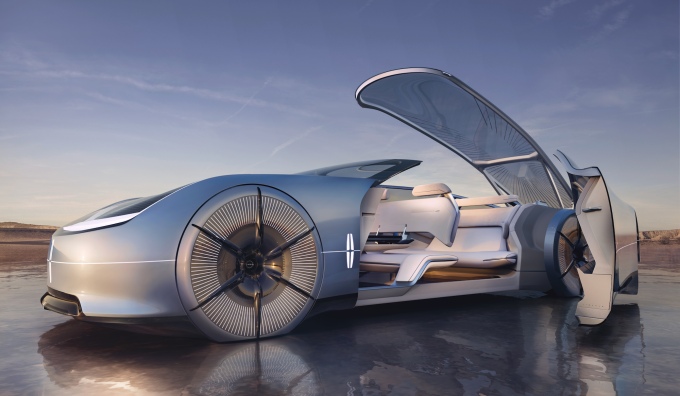
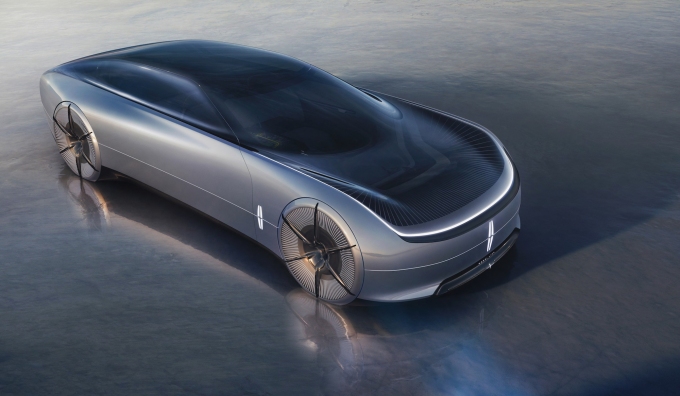
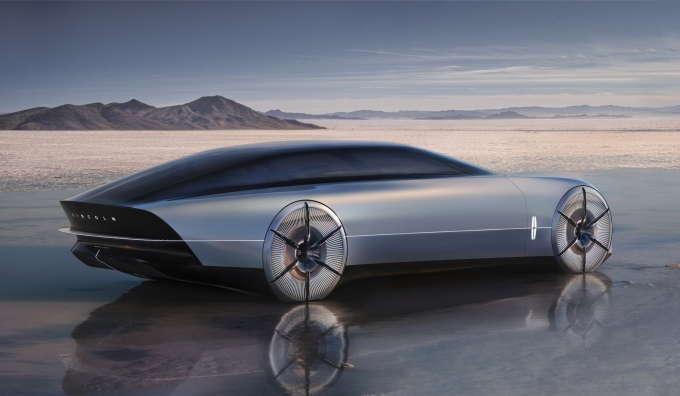
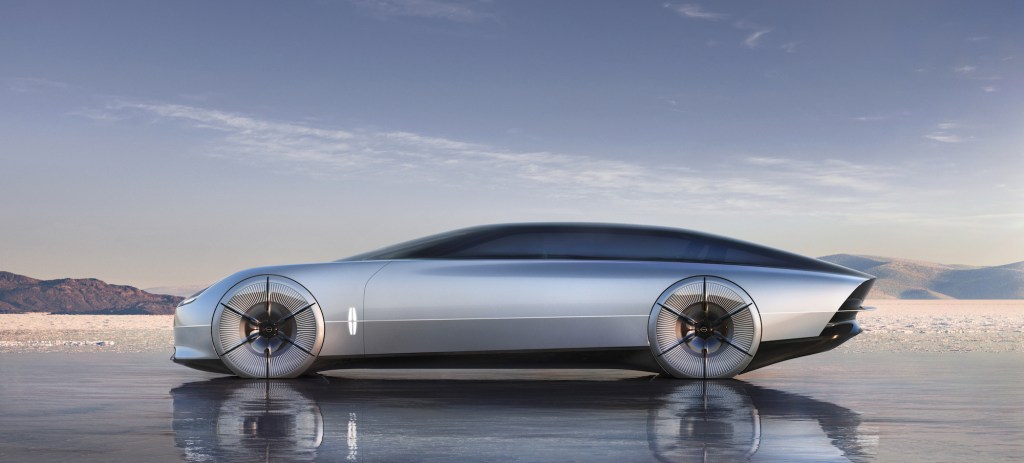
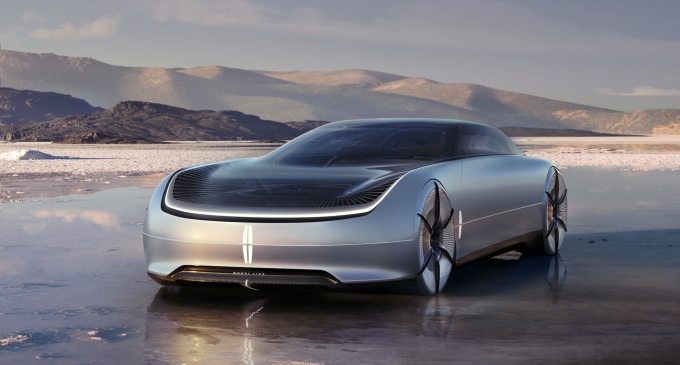
The futuristic and massive concept has an aerodynamic, low-slung body that features a sweeping glass roof that opens and reverse-hinged doors that lift to bestow a “sense of ceremony” and provides the “Lincoln Embrace,” the company said. Taking that “Lincoln Embrace” theme even further, the Ford luxury brand notes that the wheel covers use lighting and sensors to “communicate motion, battery life and human presence.”
The vehicle’s exterior “cool, open-air blue” shade mixes metallic paint and frosted acrylic. This futuristic design sprinkles in some 1920s art deco touches like the hood ornament as well as a Kammback, or K-tail, rear end that slopes down and then abruptly cuts off for improved aerodynamics to complete the look.
Inside, the cabin is trimmed with recycled suede fabric in amethyst. The configurable cabin is one of the more eye-popping features, in which the front seats flip to face passengers in the rear seats, and “an interactive, center console chessboard” is placed where one might expect a steering wheel. The console features “a jewel-inspired chess piece controller that captures light and depth by redefining the vehicle controls inside the cabin,” according to the company.
Lincoln also said the car will have a “digital floor” but did not elaborate on what that means beyond that it combines interior lighting to “transport passengers to the sanctuary of tomorrow.”
Outlandish concepts like the Lincoln Model L 100 are often couched as design or research exercises that allow a company to explore what its future portfolio might look like. For Lincoln, it’s a process that will likely be used to determine interest in certain features or designs as it pushes forward with plans to fully electrify half of its offerings by 2050.
 Hennessey Garage
You must be logged in to post a comment.